One Acre, Zero Dependency.
Off-grid, AI-driven farming on two plots 2,256 km apart: Prora through summer, Castelo Branco through winter. One question: how much of a small farm's daily decisions can genuinely off-grid AI handle, from sensor to scheduler?
Two plots, one season
Prora runs through the summer, Castelo Branco through the winter. Between them there is never a month with nothing growing.
Nothing leaves the acre
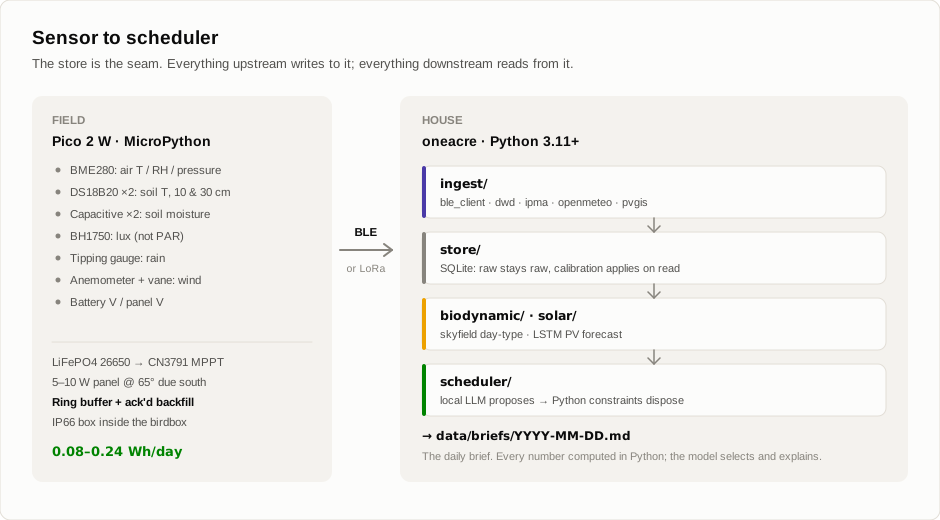
Sun to sensor to laptop to schedule. The model runs locally, which is the only way the off-grid claim survives contact with a bill.
The model proposes, Python disposes
Every suggestion passes a deterministic rule set before it becomes a task. What fails the rules is dropped, and the drop is logged.
~/what it does
Sensor, history, calendar, model.
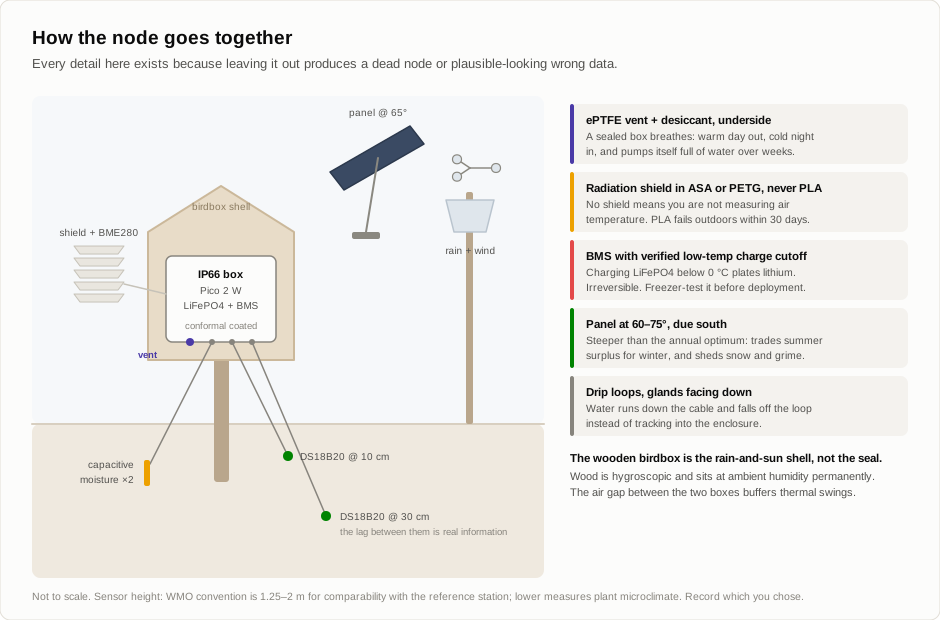
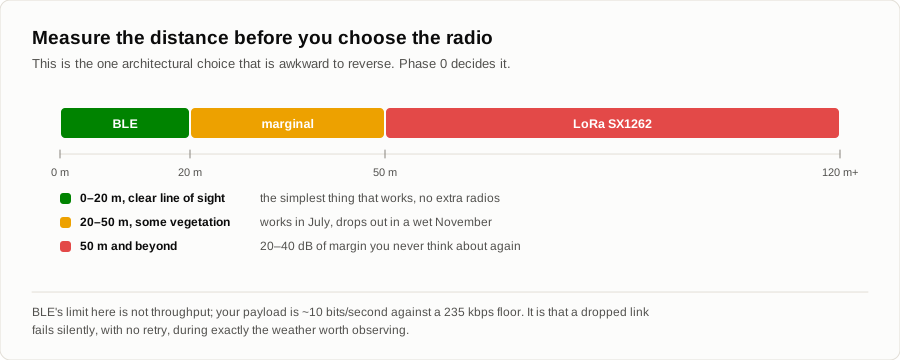
A solar-powered field module (Birdbox) collects soil and local weather data. The Open-Meteo historical archive adds twenty years of regional weather. Eurostat adds regional yield figures, coarse ones: annual, per hectare, per region, not per bed. The Thun calendar supplies a moon-based planting calendar, which this project computes correctly and tests instead of assuming.
The calculations run in Python. A local model lays the results side by side and proposes which crops give the best yield per planting, when to sow, and which rotations work on 4,000 m².
The aim: something farmers, hobby growers and families can hold on to, to grow organically at any scale, on modern technique and age-old concepts that protect the earth.
~/where
Two plots, 2,256 km apart.
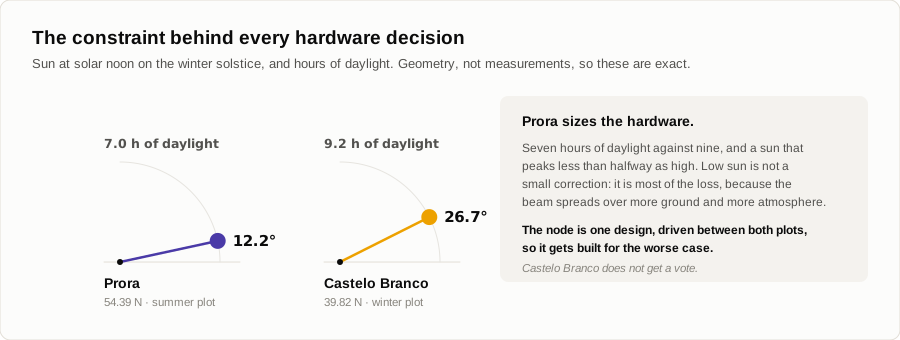
14.6 degrees of latitude apart. You follow the growing season instead of fighting it.
Prora summer
- where
- Rügen, German Baltic coast
- latitude
- 54.39 °N
- reference
- DWD Arkona, station 00183, 33 km north
- winter solstice
- 7.0 h of daylight, sun peaks at 12.2 °
Castelo Branco winter
- where
- Central Portugal, inland
- latitude
- 39.82 °N
- reference
- IPMA long series, plus ERA5-Land
- winter solstice
- 9.2 h of daylight, sun peaks at 26.7 °
Prora leans on DWD Arkona, with measured radiation from 1947. Castelo Branco has no equivalent open history and leans on ERA5-Land. That asymmetry is not papered over.
~/commitments
Three things it does not compromise on.
Off-grid means off-grid.
No cloud LLM in the daily loop.
Every number carries its error bars.
A €30 sensor claiming ±0.3 pH does not get to report pH to one decimal.
The calendar is a hypothesis.
The biodynamic calendar is under test, not a scheduling rule.
~/the field node
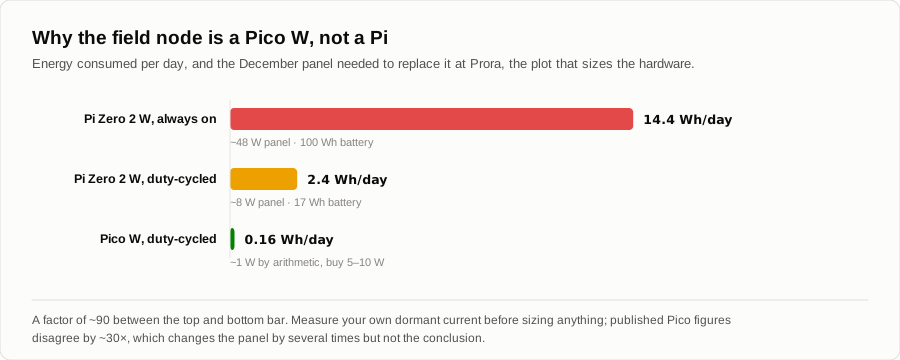
A Pico, not a Pi.
Tap a picture to see it full size.
~/the calendar
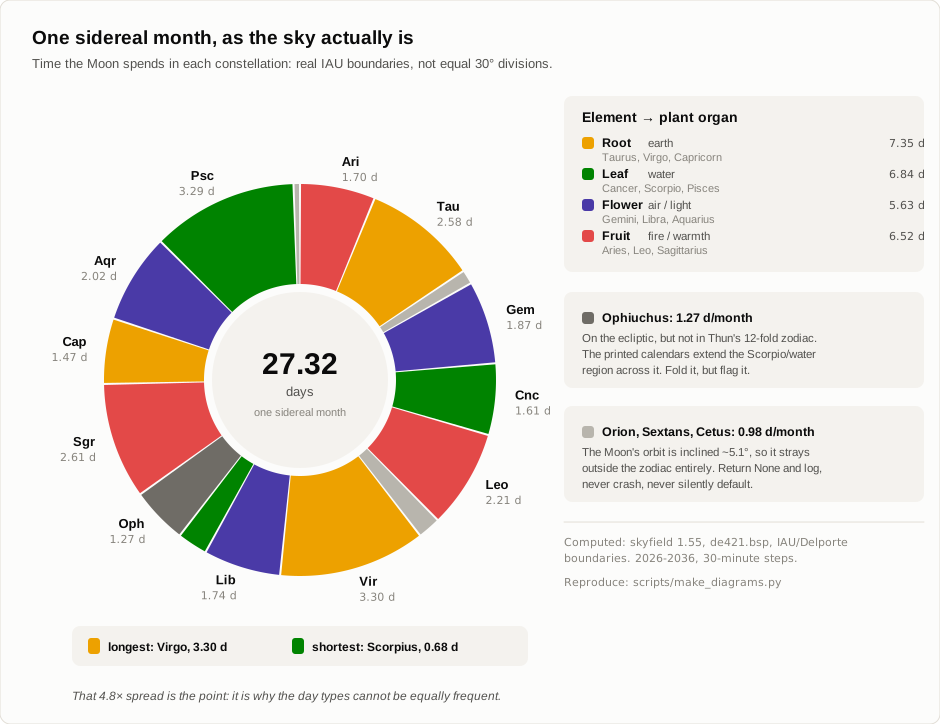
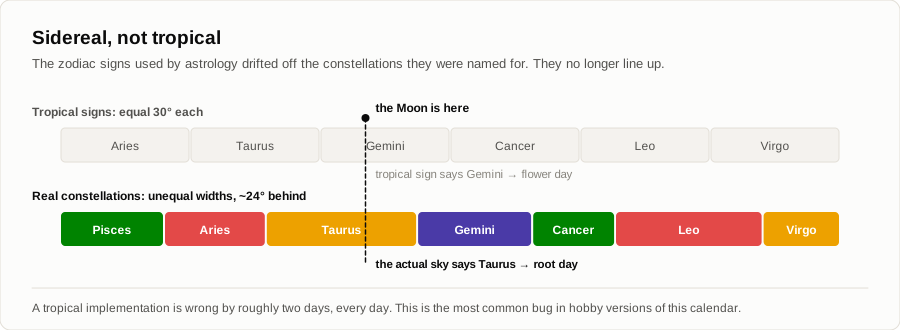
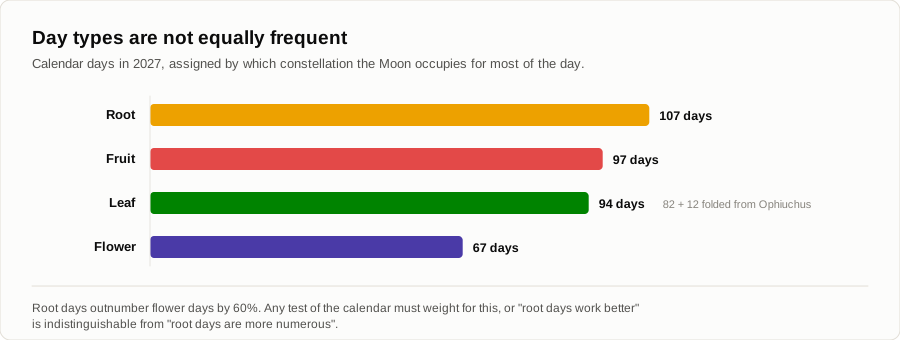
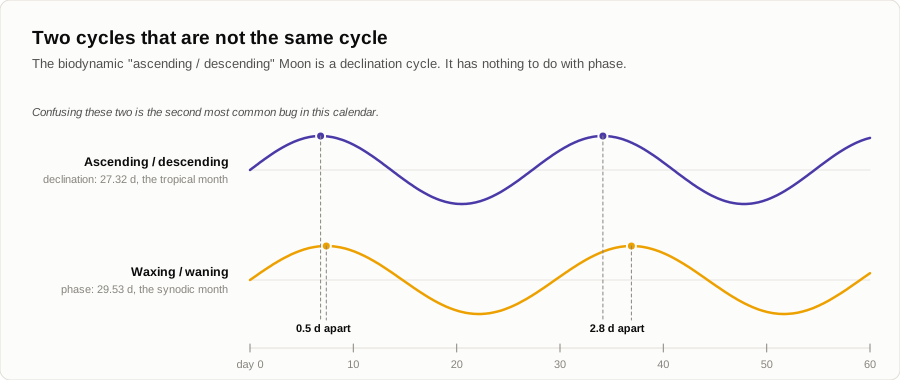
The Thun calendar, honestly implemented.
The evidence does not support the trigon effect. The calendar is therefore logged as a covariate and tested, never used as a rule.
~/models
The LLM proposes, Python disposes.
Every number is computed in tested Python. The model selects, prioritises and explains, and returns JSON validated against a schema. What fails the rules is dropped, and the drop is logged. What it is aimed at: yield per square metre.
~/roadmap
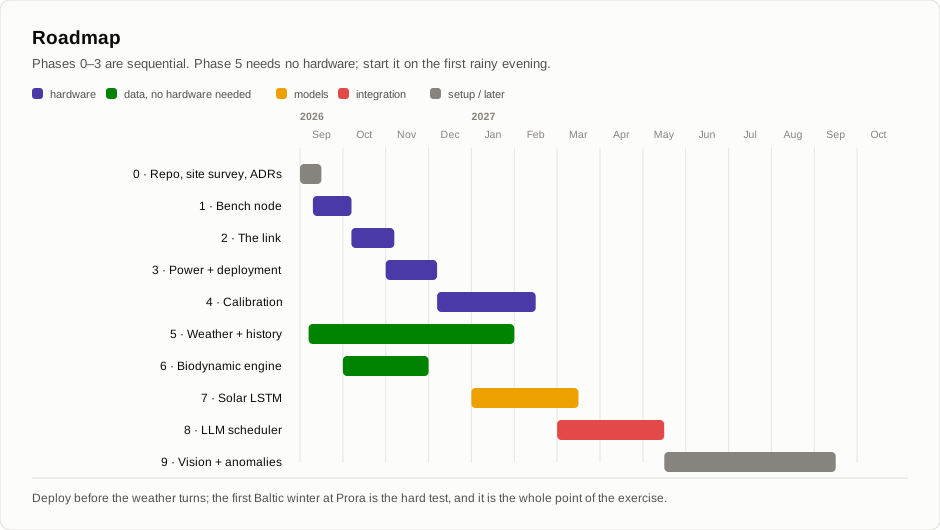
Ten phases.
~/see the real thing
Read the plan. Read the code.
AI-Homestead
The repo. Build plan, ADRs, data sources, and the figures on this page.
PDFProject overview
Short brief. The two plots, the three commitments, and what each data source can and cannot claim.
MIT for the code. Weather data from DWD (CC BY 4.0), IPMA, and Open-Meteo (CC-BY-4.0). Ephemerides from JPL via skyfield. No copyrighted calendar data is redistributed.
~/next
Same rigour,
your problem.
--:-- in Kaunas · office hours · Mon to Fri, 10:00 to 18:00